
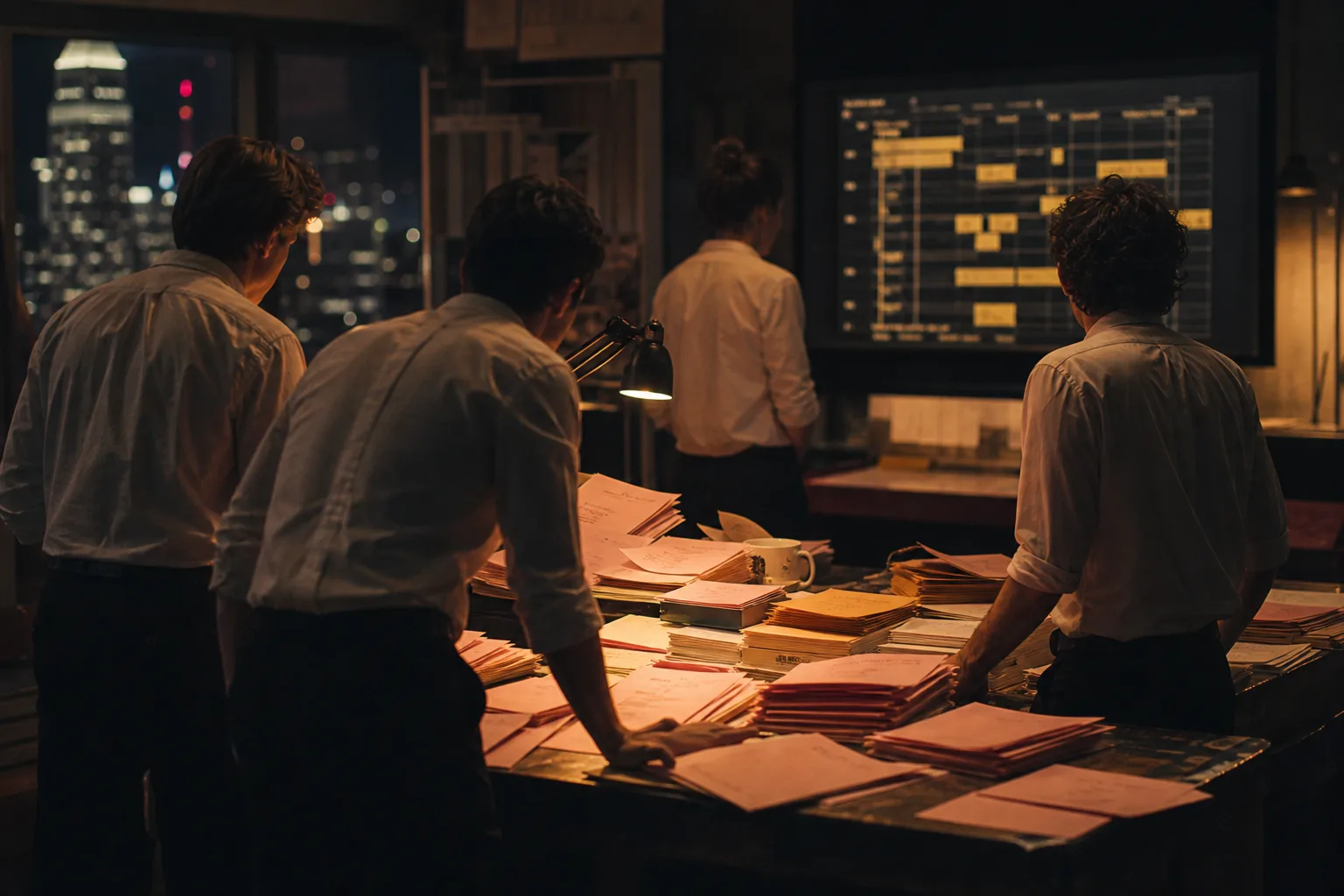
It's 11:40 at night and the AD just dropped a pink revision into a Slack thread that already has forty unread messages. Two pages. A new warehouse scene, a diner beat that vanished, and the lead's hard out on Friday didn't move. The line producer opens the breakdown spreadsheet, then last week's stripboard, then the top sheet finance already walked the bond company through. None of them agree anymore. Shoot starts Monday.
That's the pink page problem. Not that scripts change. Scripts always change. The problem is everything else still thinks it's last Thursday.
We've sat in this room more times than we can count. Writer's draft lives in Final Draft. Breakdown lives in a color-coded spreadsheet someone swore they'd lock. Stripboard lives in Movie Magic. Budget lives in a file named FINAL_v7_USE_THIS. A two-page revision turns into a scavenger hunt. Who updated the element list. Who moved the company move. Who told accounting the page count went up. By the time the answers land, you're scheduling a scene that isn't in the script and budgeting a day that isn't on the board.
In film, a revision isn't a document. It's a fork in the production. Scene 14 grows by a page and suddenly you need a night exterior, a picture car, and an extra. Scene 22 disappears and you've still got a location hold and a grip package for a set that no longer exists. If those facts don't move with the pages, the schedule is fiction and the budget is a memory.
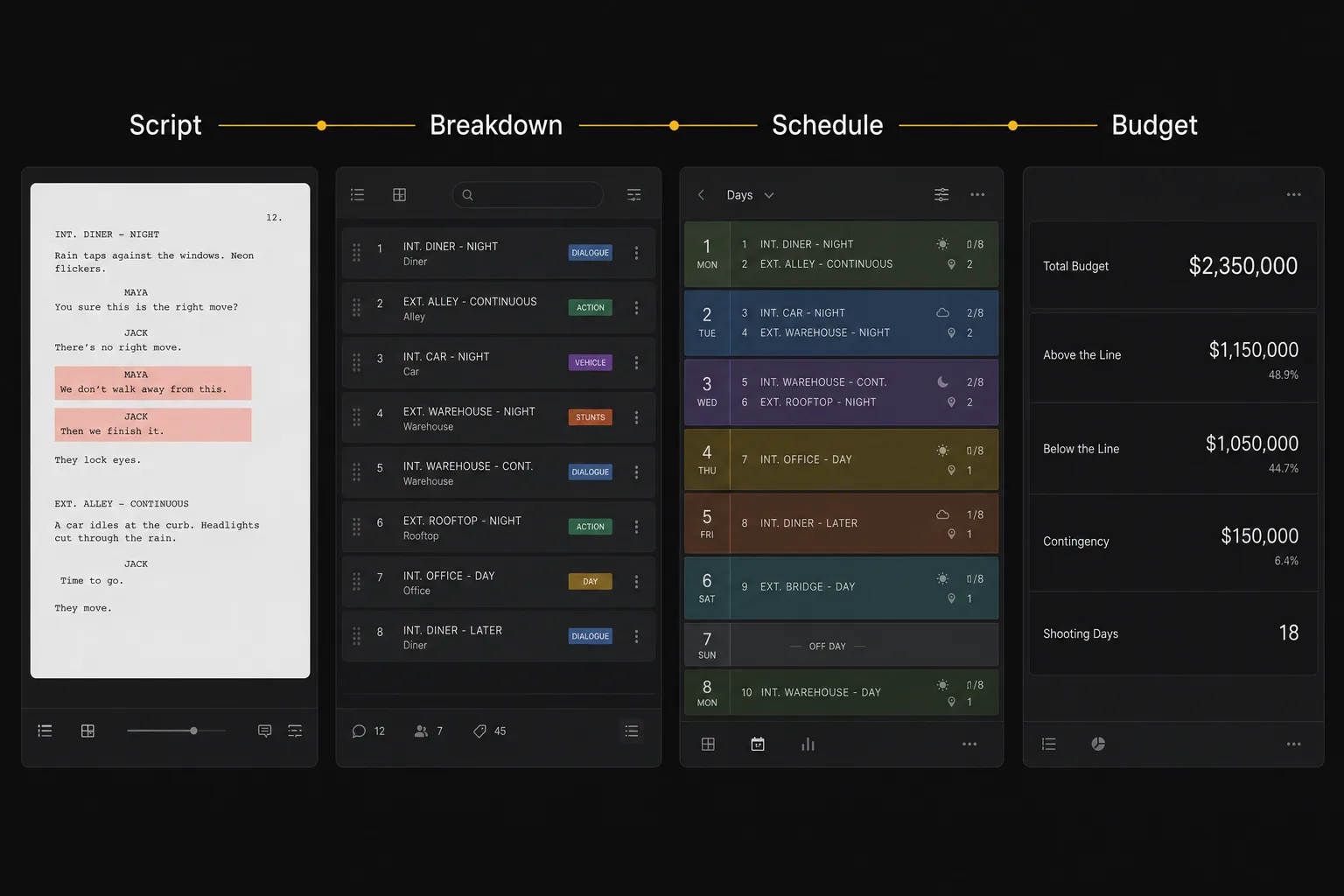
That's why we built RivetAI around one screenplay, not a pile of exports. Write, breakdown, schedule, and budget sit on the same draft. You change the script once. The pipeline follows. Tags, elements, stripboard, top sheet. Same pages. Same night.
You still make the calls. A new warehouse scene might belong on Saturday or it might belong in the boneyard until you know if the location is real. A deleted diner beat might free a day or it might strand a company move. Funky edge cases stay in your hands, same as they should. What you stop doing is re-typing Scene 14 into four tools that have never met.
The Enterprise Stakes?#
At the studio level, a pink revision is never two pages. It's two pages plus legal, plus the completion bond, plus a department that already ordered the rain rig. The question isn't "did anyone see the new draft." It's "can we prove every schedule and every number is looking at the same one." That's why we keep revision history, snapshots, and a side-by-side diff in the editor. You can see what changed. You can rerun the breakdown. You can rebuild the stripboard from the scenes that actually exist now. Finance can pull a top sheet that matches the board you just locked, not the one from last Wednesday.
And if you still need Movie Magic or a PDF for someone who doesn't live in RivetAI, you export. The difference is you're exporting from one draft, not reconciling four.
We already wrote about actor availability, because cast is the constraint that bends the schedule. Pages are the other one. A stripboard that ignores a hard out is useless. A stripboard that ignores the latest draft is the same sin in a different font.
Our goal isn't to automate the taste. Someone still has to decide whether the warehouse is worth the night premium. What we automate is the part that should never have been a job: keeping four departments honest after two pages land at 11:40.
TL;DR - A revision that doesn't move the breakdown is fanfiction with a production number. Studios deserve a plan that updates when the pages do. That's why RivetAI starts where the show starts: one screenplay, and everything else attached to it.